
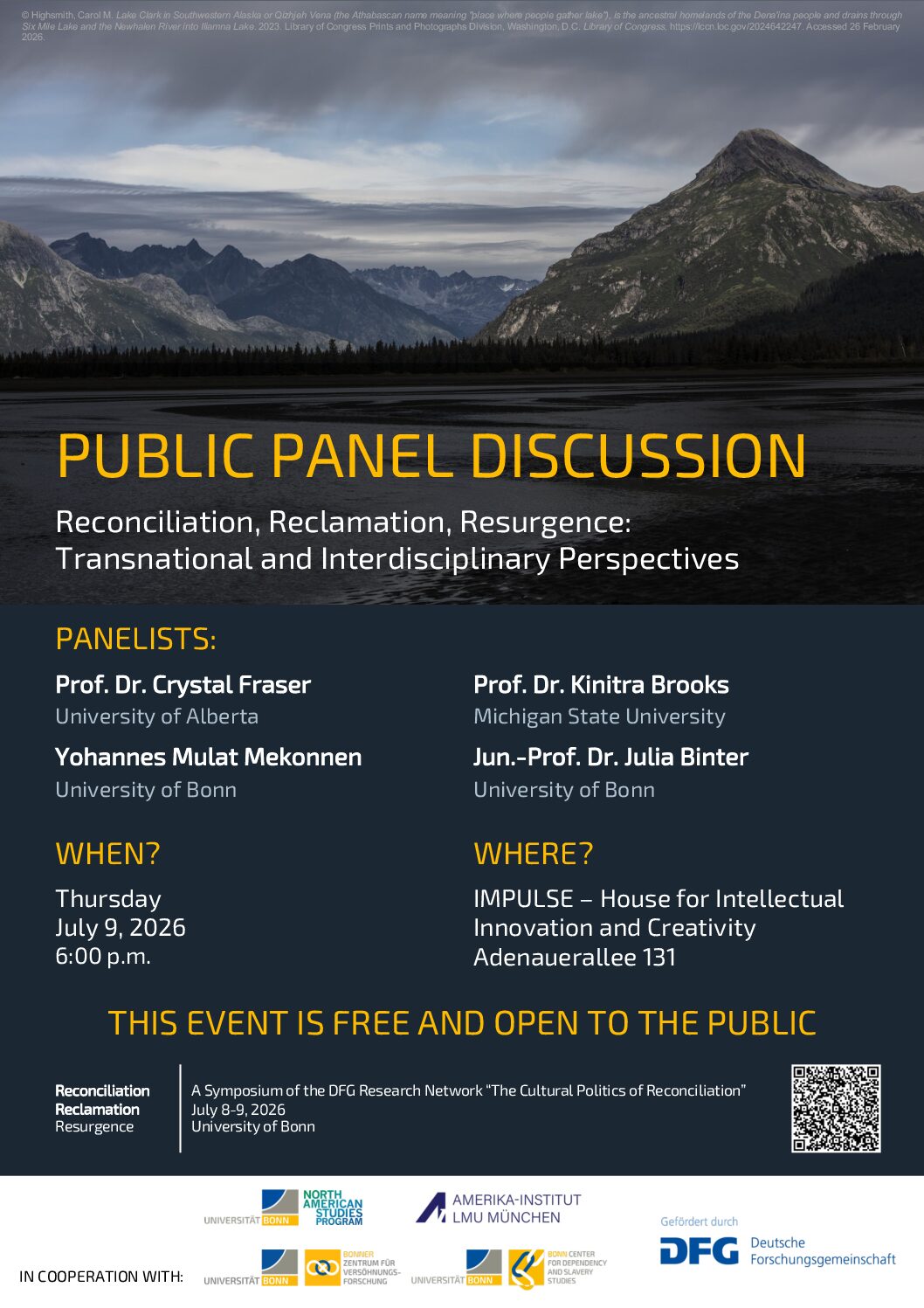
We would like to draw your attention to a public panel discussion on “Reconciliation, Reclamation, Resurgence – Transnational and Interdisciplinary Perspectives,” on Thursday, 9 July 2026, 6pm (IMPULSE, Adenauerallee 131). This public panel discussion brings together Indigenous Canadian, African American, German, and Namibian perspectives on processes and practices of reconciliation, reclamation, and resurgence. It showcases the […]
Category: Events
Crafting a Life – Summer: Join us for a Participatory Art Project (12.07.2026)
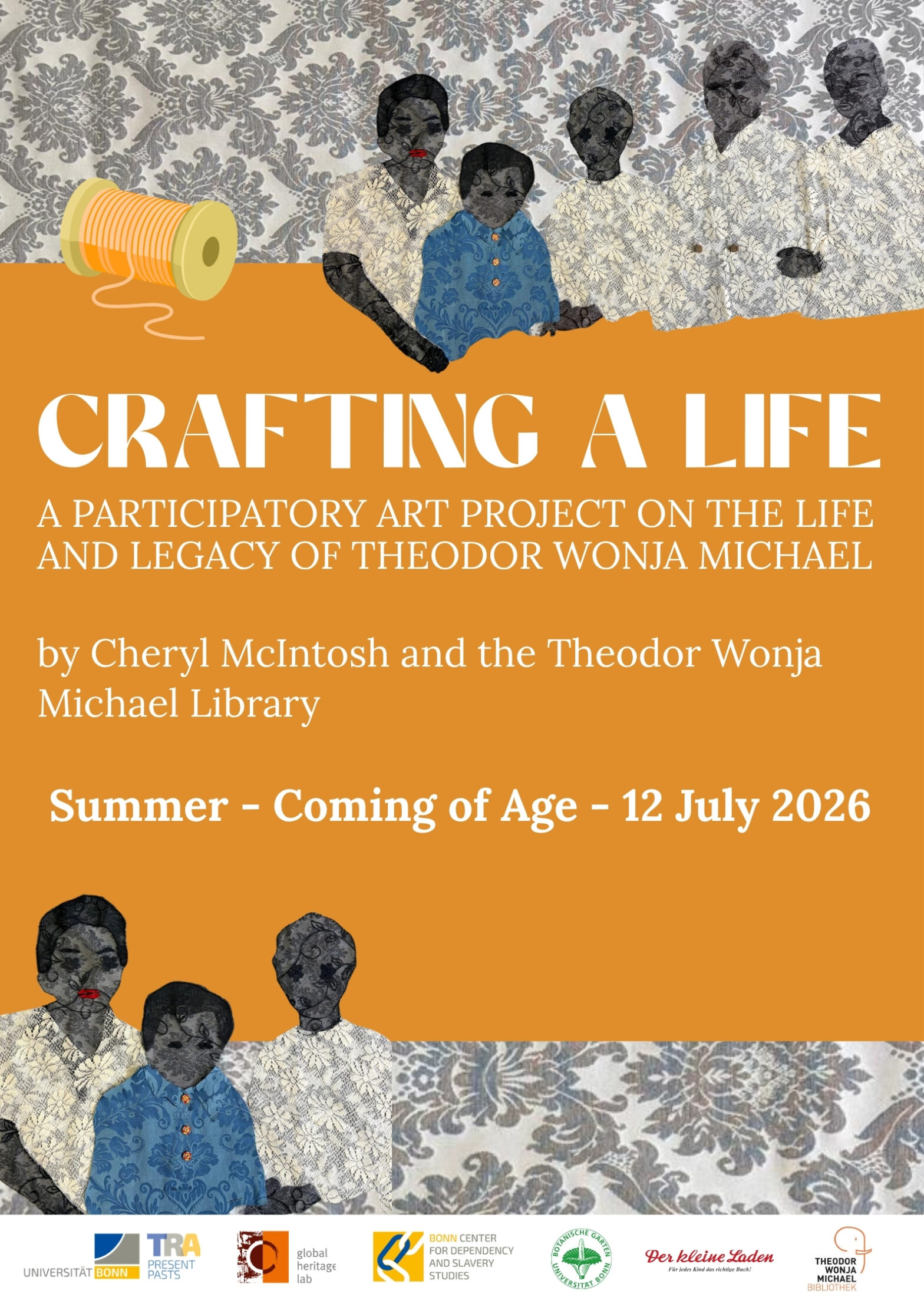
Join us for the second participatory art workshop of the series Crafting a Life: A Participatory Art Project on the Life and Legacy of Theodor Wonja Michael: Summer (Coming of Age). The Workshop is about the teenage years of Theodor Wonja Michael (1925-2019) —a key figure in Afro-German history. The Workshop invites you to engage, reflect, and create together, it weaves storytelling and textile art into a shared, collective experience.
Exhibition: Liquid Archive by Jasmine Togo-Brisby (17.06.-06.09.2026)
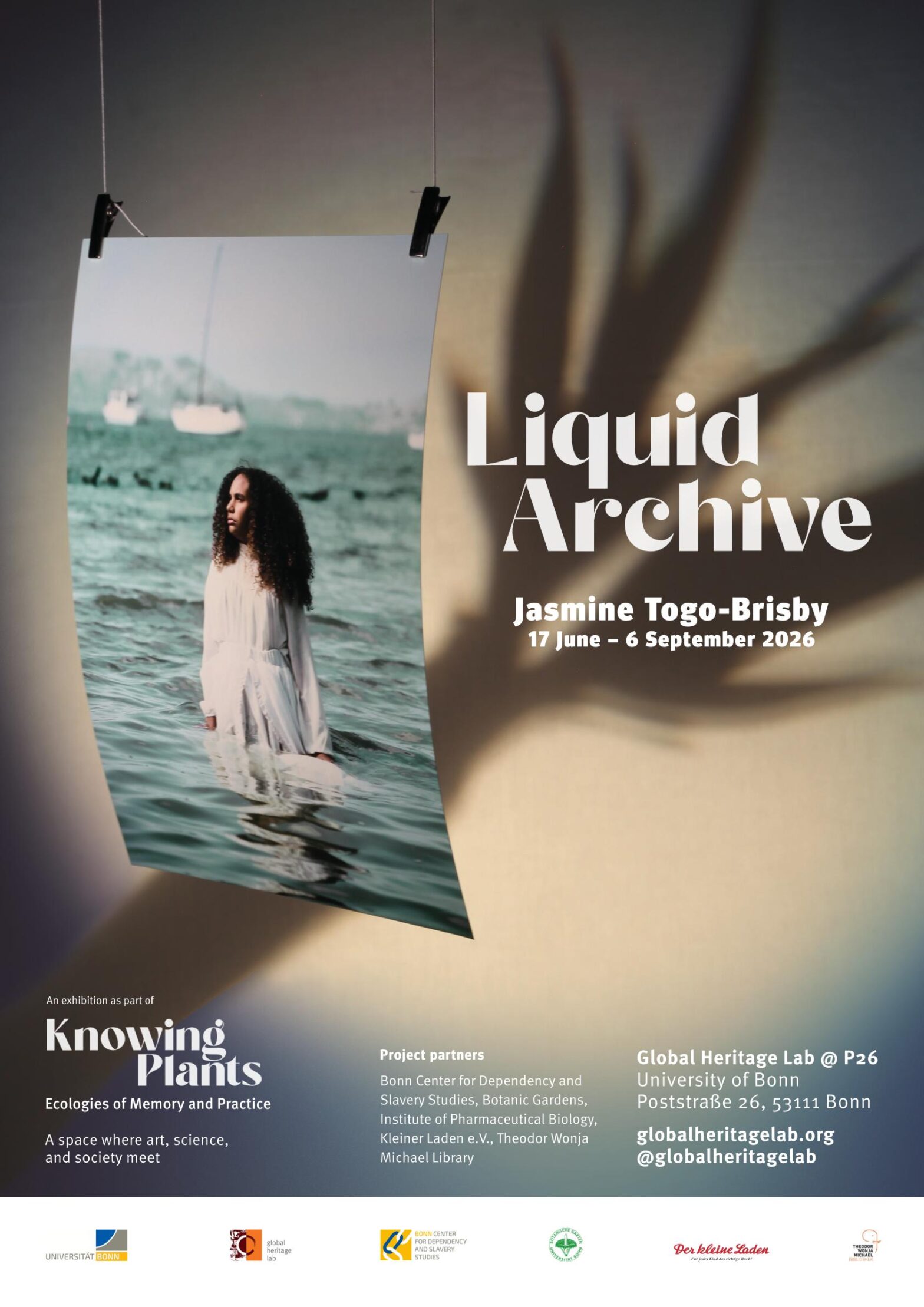
The exhibition explores the ongoing legacy of a destructive form of Knowing Plants: the plantation system, which relied on the exploitation of plants, people, and ecosystems.
Working Group Meeting of Justitia et Pax at the Global Heritage Lab
13.04.2026 How does the Catholic Church engage with the legacy of colonialism? This question was at the center of a meeting of the working group “Dealing with the Consequences of Colonialism” of Justitia et Pax at the Global Heritage Lab of the University of Bonn. In the context of increasing global interconnectedness, the historical burdens […]
Performance “Transplant: Healing in the Mapuche Diaspora” by Neyen Pailamilla (19.03.2026)
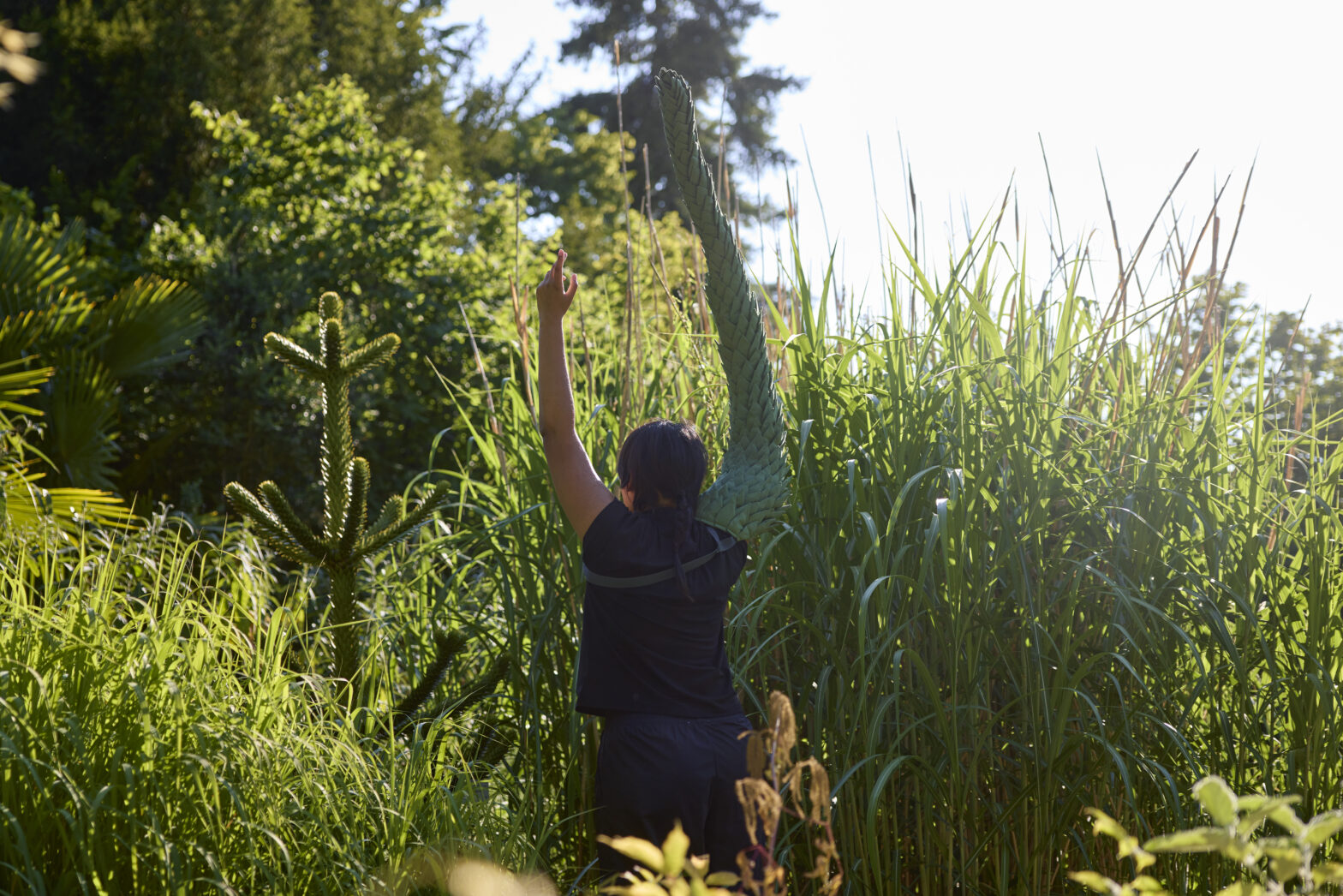
We warmly invite you to join us on 19 March 2026 for a special program: At 4 pm, artist Neyen Pailamilla will present the performance Transplant: Healing in the Mapuche Diaspora in the Botanic Gardens Bonn. In Neyen’s work, plant knowledge becomes a lived, embodied, and spiritual process unfolding between humans, plants, bodies of water, […]
Panel discussion: German Colonialism and its first Genocide (11.03.2026)
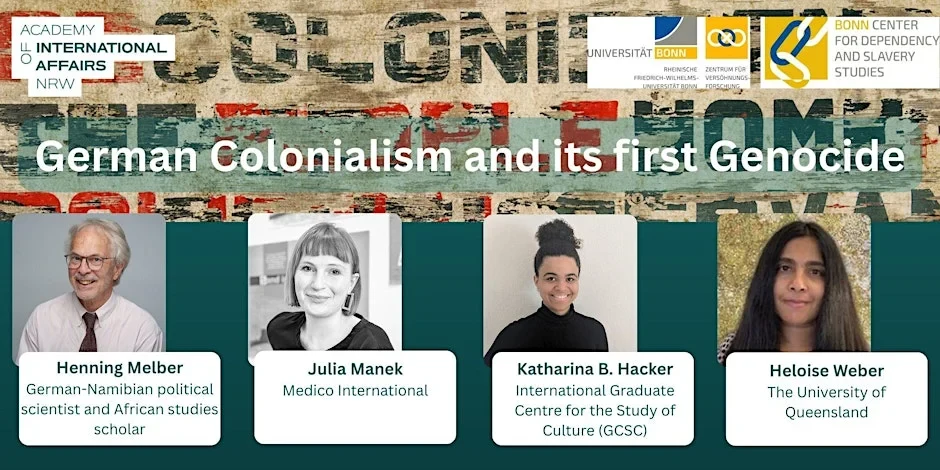
As Europe rethinks its foreign policy amidst shifting global political relations, one question remains central: Can cooperation succeed without confronting colonial history? This panel takes Germany’s first genocide of the 20th century in Namibia as a starting point to explore how colonial legacies continue to shape today’s global crises, from geopolitics and inequality to diplomacy […]
Exhibition Opening: Knowing Plants – Ecologies of Memory and Practice (19.03.2026)
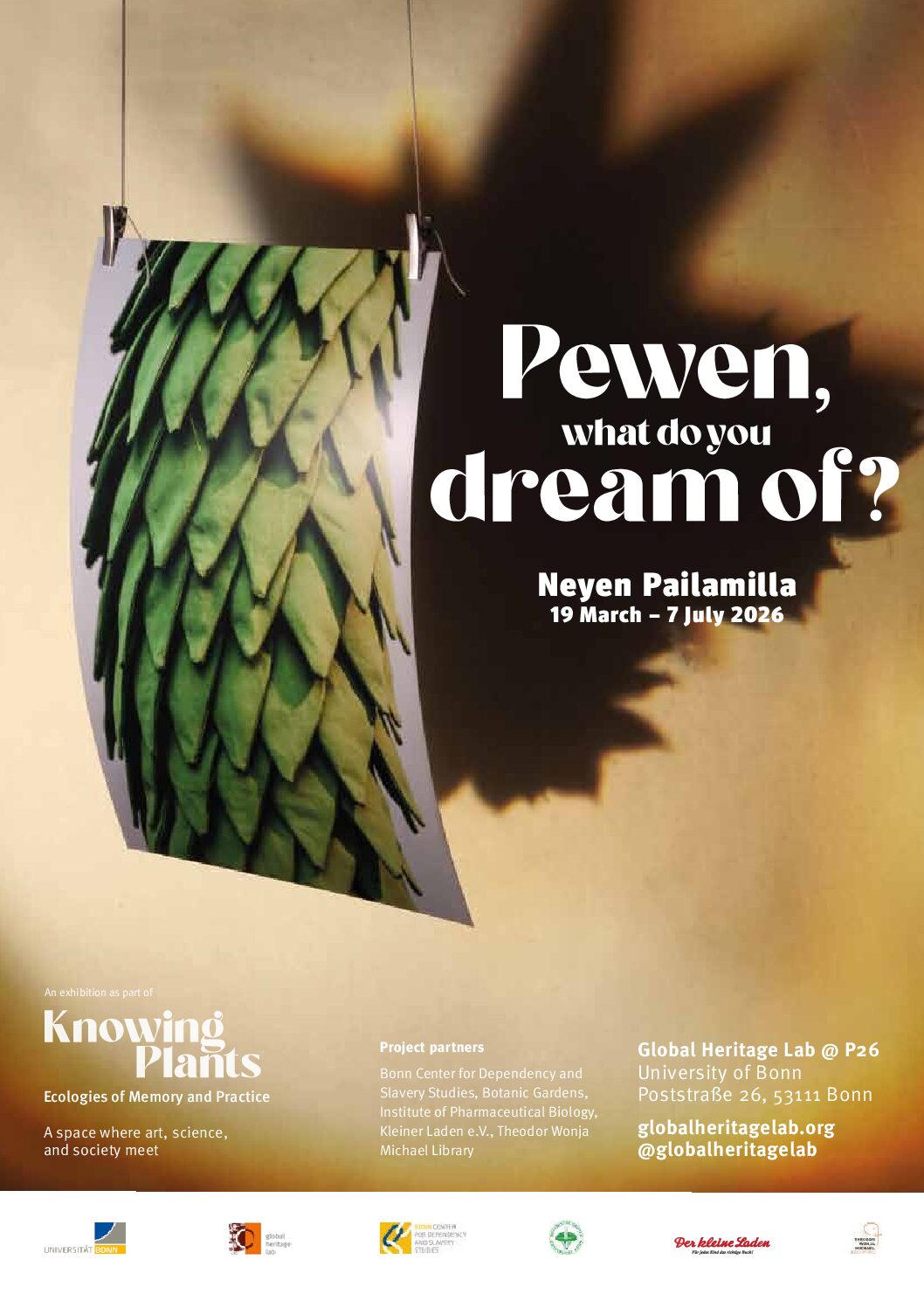
What forms of knowledge shape the ways we relate to plants and our environment – and how can we create sustainable relationships with them?
The exhibition invites visitors to engage with historically shaped relationships with plants, ecosystems, and waters, and to reflect together on more responsible ways of engaging with the environment.
Paper publication by our former Argelander Academy Fellow Dr Judy Marcela Chaves-Agudelo

Our former Argelander Academy Fellow, Dr Judy Marcela Chaves-Agudelo, published a paper in which she worked during her stay: Chaves-Agudelo, J.M. (2025). Natures, territories and the Breath of Life: The maintenance of Jagɨyɨ or Jafaikɨ among the Murui people in the present, Colombian Amazon. Visions for Sustainability, 24, 411-426. https://doi.org/10.13135/2384-8677/12799 Abstract The Murui people’s concept ofJagɨyɨorJafaikɨsignifiesBreath […]
Co-Curating the 18th German International Ethnographic Film Festival
Jun.-Prof. Dr. Julia Binter and Yohannes Mekonnen, Global Heritage Lab’s Visual Anthropology Fellow, have joined the selection committee of the 18th German International Ethnographic Film Festival (GIEFF), co-curating this year’s program. Among this year’s themes are heritage and decolonial methods, alongside films by directors from Africa, Latin America, Asia, the Pacific and Europe. These strands […]
Lecture and film by Behnaz Mirzai on African Slavery in Iran (11.12.25, 4-6pm)
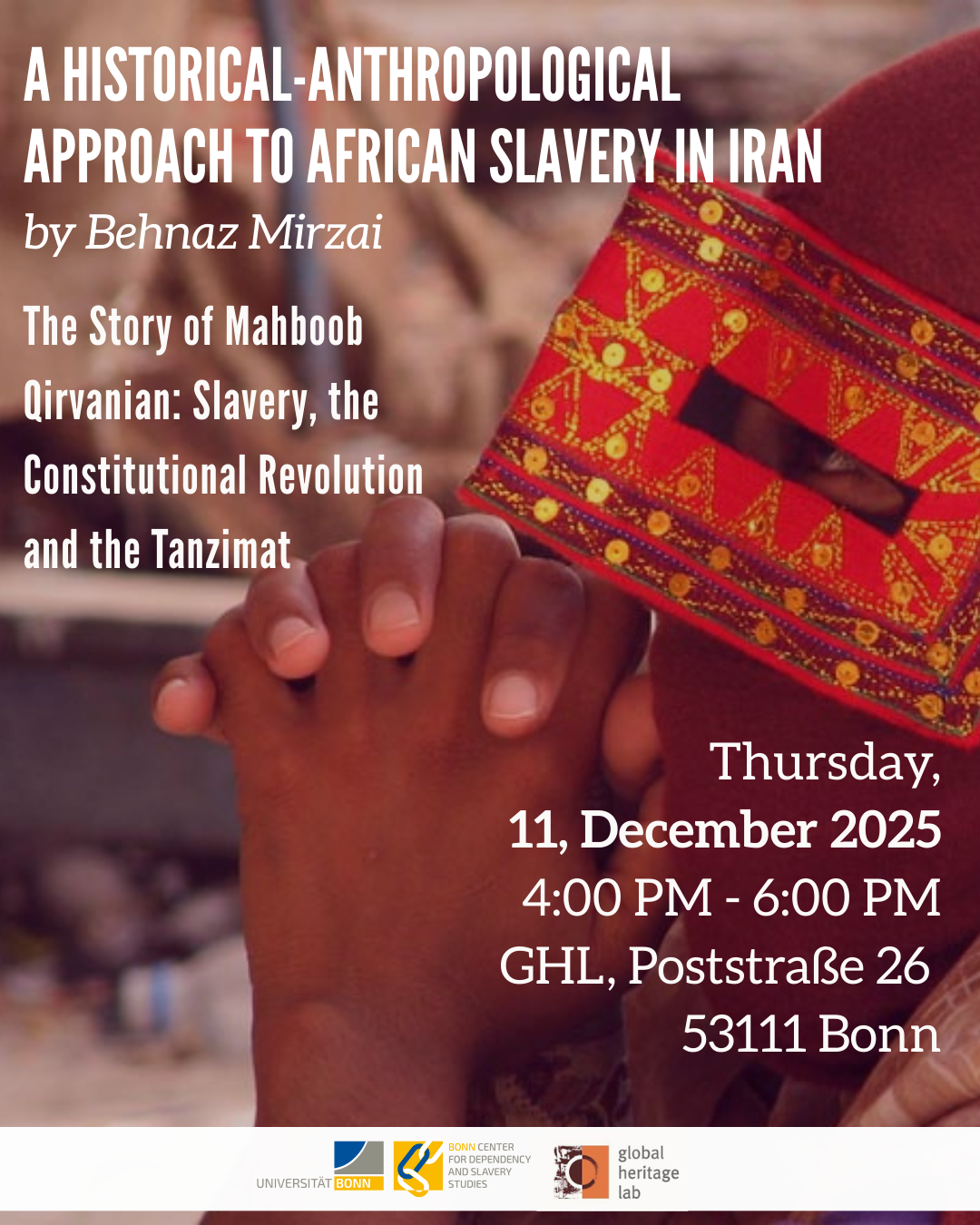
The implicated researcher: Shifting positionalities in collaborative research and restitution projects How did the Iranian Constitutional Revolution and the Ottoman Tanzimat reforms reshape slavery across the Indian Ocean, Mediterranean, and Middle East?This talk by Behnaz Mirzai, Professor of Middle Eastern History at Brock University, examines the shared origins of Qajar Iran and the Ottoman Empire—neighboring […]