
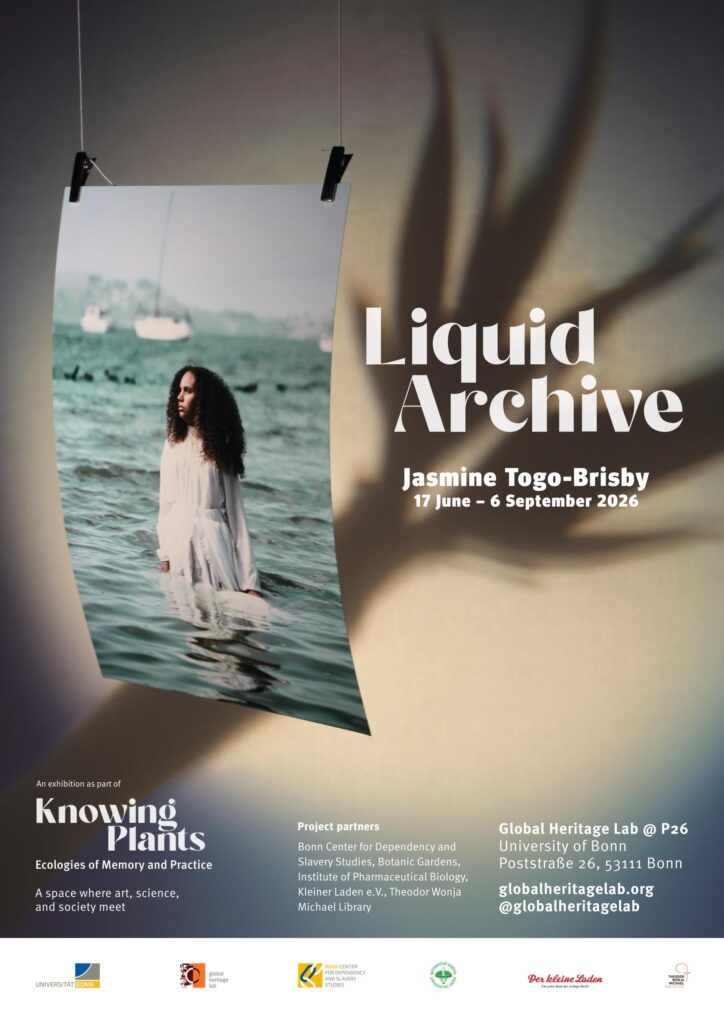
Liquid Archive
Jasmine Togo-Brisby
17 June 2026 – 06 September 2026
Photo: Stephanie Beaugrand
 By Jun.-Prof. Dr. Julia Binter and
  Joanne Rodriguez
Knowing Plants: Summer
Liquid Archive
What memories does water hold?
The video work Mother Tongue (2020) shows the artist Jasmine Togo-Brisby together with her mother and daughter at the wreck of the Don Juan — a ship connected to so-called blackbirding: the abduction of Pacific Islanders and their indentured labour on sugar plantations in Australia.
Across generations, these histories persist — in the body, the land and in the sea. There, the water becomes a “liquid archive” in which loss, resistance, and care are embedded.
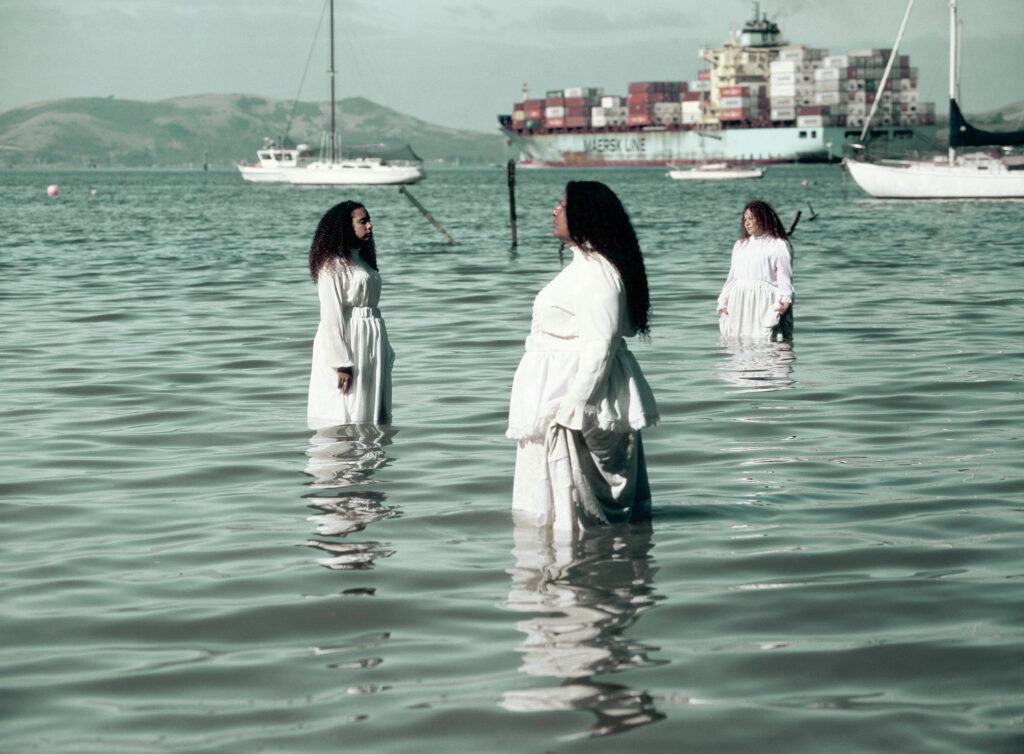
Drawing on their own family history, the photo series From Bones and Bellies (2021) transforms the women’s bodies into memorials to colonial violence while also bearing witness to resilience, survival, and healing.
The exhibition explores the ongoing legacy of a destructive form of Knowing Plants: the plantation system, which relied on the exploitation of plants, people, and ecosystems.
Jasmine Togo-Brisby is a fourth-generation Australian South Sea Islander with roots in Ambae and Santo, Vanuatu. She lives and works in Wellington, Aotearoa/New Zealand.
The exhibition is part of the research-exhibition project “Knowing Plants. Ecologies of Memory and Practice” at the Global Heritage Lab, University of Bonn.
Opening hours Global Heritage Lab: Wed-Sun 2 – 6pm, Global Heritage Lab at P26, Poststraße 26, 53111 Bonn.
Entrance fee for P26: €4.50 / €2.50 (reduced) / free (students at University of Bonn)
Zweites Kapitel: Sommer
Liquid Archive
(flüssiges Archiv)
Welche Erinnerungen trägt das Wasser in sich?
Ausgehend von ihrer eigenen Familiengeschichte
entwickelt Jasmine Togo-Brisby in der Ausstellung Liquid
Archive eine vielschichtige Auseinandersetzung mit Erinnerung,
kolonialen Spuren und Heilung. Die Videoarbeit
Mother Tongue (2020) schafft eine immersive räumliche
Erfahrung. Der Film zeigt die Künstlerin gemeinsam
mit ihrer Mutter und Tochter am Wrack der Don Juan –
eines Schiffes, das mit dem sogenannten Blackbirding
verbunden ist: der Verschleppung von Menschen
aus dem Pazifikraum zur Vertragsknechtschaft auf
australischen Zuckerrohrplantagen.
Über Generationen hinweg wirken diese Geschichten fort:
im Körper, im Land und im Meer. Das Wasser erscheint
dabei als „flüssiges Archiv“ (Liquid Archive), in dem Verlust,
Widerstand und Fürsorge eingeschrieben sind.
Die Fotoserie From Bones and Bellies (2021) erweitert
diese Erzählung. Im Meer werden die Körper der Frauen
zu Mahnmalen kolonialer Gewalt und stehen zugleich
für Resilienz, Überleben und Heilung.
Jasmine Togo-Brisby ist eine australische South-Sea-Islander-
Künstlerin der vierten Generation mit familiären
Wurzeln auf Ambae und Santo, Vanuatu. Sie lebt heute
in Wellington, Aotearoa/Neuseeland.
Die Ausstellung entstand in Zusammenarbeit mit dem
ARC-Discovery-Grant-Projekt Unfreedom, Voices, Redress:
Plantation Cultures of the Western Pacific sowie dem
Bonn Center for Dependency and Slavery Studies.
Die Ausstellung ist Teil des Forschungs- und Ausstellungsprojekts „Pflanzenwissen – Ökologien des Erinnerns und Handelns“ am Global Heritage Lab der Universität Bonn.
Öffnungszeiten Global Heritage Lab: Mi–So 14–18 Uhr, Global Heritage Lab im P26, Poststraße 26, 53111 Bonn.
Eintrittspreis für das P26: 4,50 € / 2,50 € (ermäßigt) / frei (Studierende der Universität Bonn)